Reviewed by Wilber C., Licensed Installer at Easy AF Turf
If you’re considering artificial turf for a South Florida yard, pool deck, or play area, here’s what you should know about heat — and, more importantly, how we design around it so it’s a non-issue for your project.
Yes, turf can get warm in direct sun — and we plan for it
Like any outdoor surface exposed to direct Florida sun — pavers, decking, even asphalt — artificial turf warms up during peak afternoon hours. University of Florida IFAS research has measured this effect on unshaded synthetic surfaces. It’s a known factor in the industry, and it’s exactly why turf selection and installation design matter: the right fiber color, the right infill, and smart placement solve this before it’s ever a problem for you.
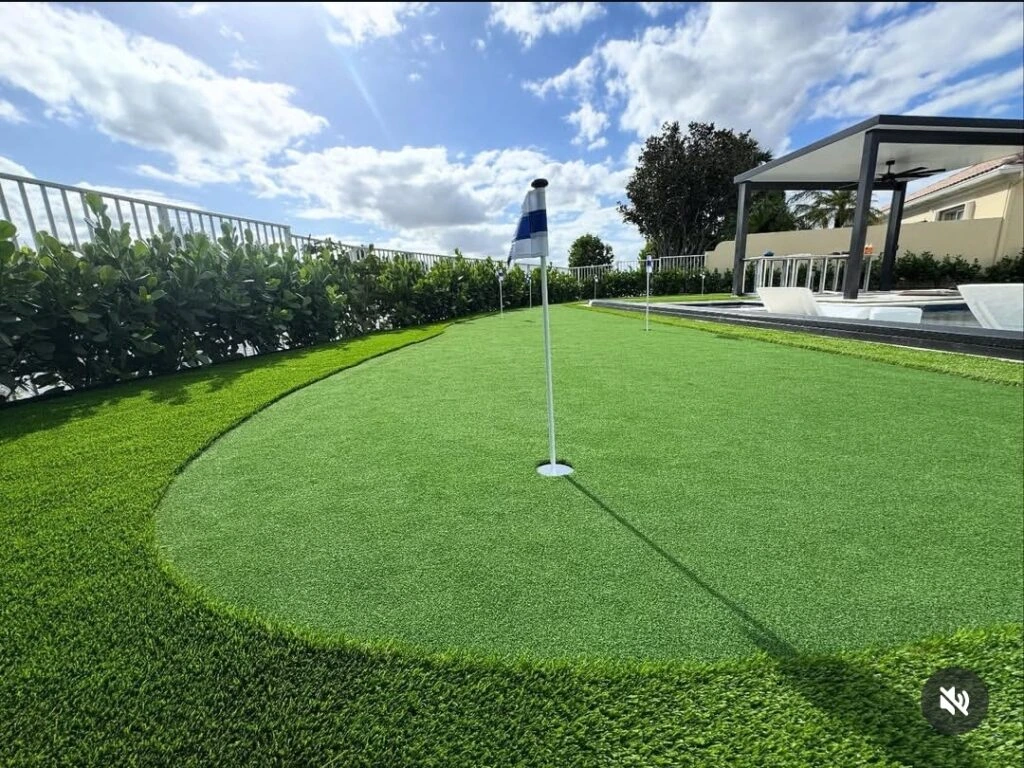
How Easy AF Turf designs around Florida heat
- Lighter-colored turf and infill options: we select fiber and infill combinations that reflect more heat, which meaningfully reduces peak surface temperature compared to standard dark products.
- Smart layout around shade: where a yard has natural or built shade — pergolas, trees, awnings — we factor that into where turf gets used for barefoot areas like play spaces and pool decks.
- The right product for the right space: a pool deck or play area gets a different turf and infill recommendation than an ornamental front lawn, because they’re used differently.
Simple habits that keep turf comfortable
- A quick hose-down before pool time or play drops surface temperature fast — the same trick people already use on pavers and decking.
- Using play areas and pool decks in the morning or evening avoids the peak-heat window entirely, same as you would with any sun-exposed surface.
The bottom line
Every outdoor surface in South Florida heats up in direct summer sun — turf is no exception, but it’s also not uniquely difficult to manage. With the right product choice and layout, most homeowners never think about it after installation. That’s the difference professional design makes, and it’s exactly what we handle for you.
Want a turf and layout recommendation built around how you’ll actually use your space? Request a free on-site estimate and we’ll walk you through the best options for your yard.
Common Questions
Will my turf melt or get damaged from heat?
Turf itself is engineered to handle direct sun without damage. The one specific scenario worth knowing about is reflected, concentrated sunlight off large energy-efficient windows, which can focus heat on one spot. If your yard has big low-E windows facing the lawn, we account for that in the layout — it’s a simple planning detail, not a reason to avoid turf.
What is artificial turf made of?
Most residential turf uses polyethylene or polypropylene fibers, chosen specifically for their resistance to fading and breakdown in direct sun — they’re built for exactly this climate.
Does infill choice make a difference?
Yes, and it’s one of the easiest ways we tune a project for comfort. We can recommend infill options selected for lower heat retention, especially for pool decks and play areas where bare feet are common.
Does hosing down turf actually help?
Yes — a quick rinse drops surface temperature fast, exactly like it would on a paver or deck. It’s a simple, effective habit for right before pool time.
How hot does artificial turf actually get in South Florida?
On a typical summer day with air temperatures in the 90s, unshaded synthetic turf can reach surface temperatures of 120–150°F during peak sun, with the narrow noon–4 p.m. window (June–September) pushing higher in fully exposed spots. The same is true of pavers, decking, and asphalt in direct sun — it’s a function of exposure, not a turf-specific flaw, which is exactly why fiber color, infill choice, and shade placement matter as much as they do in our installation planning.
2 Responses